Web Platforms for Regulated Pharmaceutical Manufacturers
Summary
We build web platforms for regulated pharmaceutical manufacturers that supply medication directly to patients. Work of this kind covers verified registration for patients, caregivers and healthcare professionals, a document intake and review pipeline for prescriptions and authorizations, entitlement-aware ordering, warehouse operations with batch traceability, and event-driven integration between the storefront and the business application suite that runs accounts, finance and inventory.
The Challenge
Before an order can be accepted, the buyer must be registered and verified, and their medical eligibility must be supported by documentation such as a prescription, a practitioner authorization or an insurance application. Handled on paper and by post, the consequences are predictable: long validation cycles, manual error, documents lost or damaged, and applicants abandoning the process. Digitizing it means building an identity and document pipeline at least as rigorous as the paper one, not a form that emails an attachment.
The regulated constraints continue past registration. Evidence expires, so prescriptions and authorizations that lapse must be caught before checkout. Dispatch requires batch traceability precise enough to make a recall executable. National rules determine what evidence is required, what may be stored and for how long, and what may be shown to whom. The recurring mistakes are storing medical documents in the same trust zone as marketing data, building validation queues with no service-level visibility, treating caregiver delegation as a profile flag rather than an auditable relationship, and integrating order and inventory systems without idempotency, which produces duplicate shipments of controlled products.
The Solution
Registration, identity and authorization
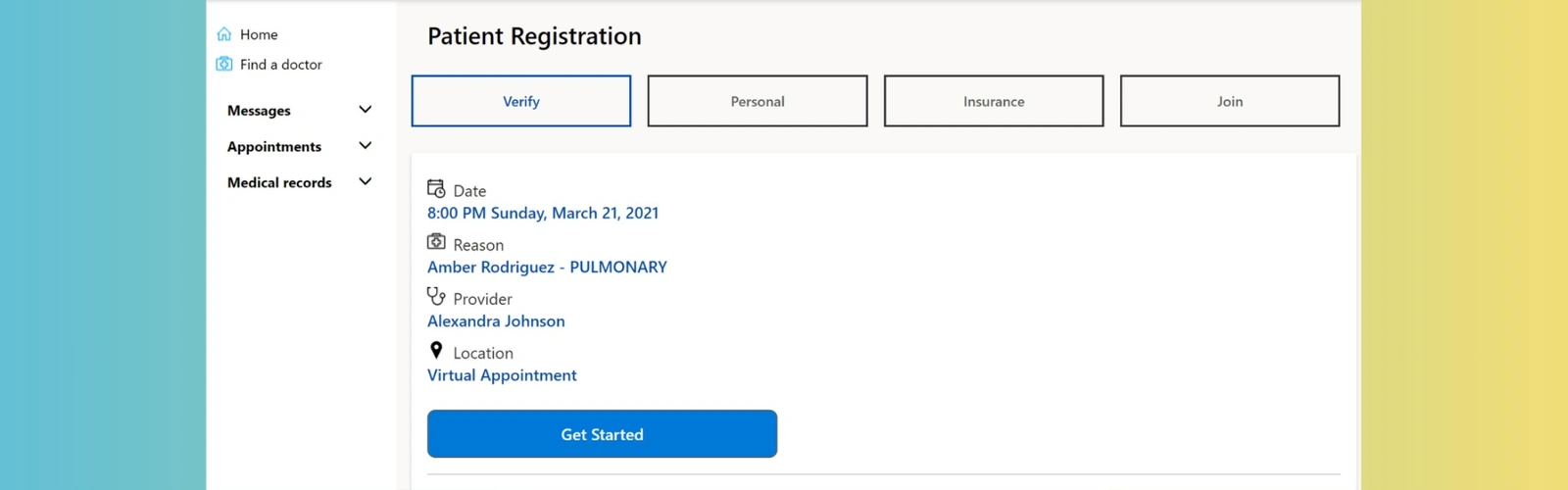
We build separate but connected registration journeys for patients, caregivers and healthcare professionals, because their evidence and permissions differ. A caregiver acts on behalf of a patient and needs an explicit, revocable delegation record; a healthcare professional needs credential verification against the relevant registry. Authorization uses OAuth 2.0 and OpenID Connect with the authorization code flow and proof key for code exchange, issuing scoped tokens so services receive only the claims they need rather than direct access to medical records. Consent is captured as a versioned, timestamped record tied to the policy text in force at the time.
Document intake and review
Uploaded documents move through a defined pipeline: format and size validation, malware scanning, storage as encrypted immutable objects with managed key rotation, text extraction and optical character recognition, then indexing so reviewers retrieve applicant records by name, identifier or document attribute. A review workflow routes each submission to a validator with clear states for accepted, rejected with reason, and awaiting further evidence, and each transition is audited. The model stores validity periods and drives proactive renewal, because expiry matters as much as acceptance.
Ordering, fulfilment and warehousing
Once eligibility is established, the order path has its own regulated constraints. Orders are checked against entitlement and quantity limits before payment. Fulfilment requires:
- Lot and batch traceability from receipt to dispatch
- Expiry-aware picking so the earliest-expiring stock leaves first
- Barcode scanning at each handling step
- A genealogy record linking each shipment to the batches it contained
- Receiving, put-away, replenishment, pick, pack, dispatch and returns, with cycle counting instead of disruptive full stocktakes
Integration and delivery approach
These platforms sit between a storefront and a business application suite. Integration is event-driven rather than nightly batch: order and account events are consumed through webhooks, and updates flow back as fulfilment progresses. Because webhooks arrive at least once and can arrive out of order, every consumer is idempotent on a stable event key, and reconciliation jobs compare both sides on a schedule and report divergence. Master data ownership is agreed explicitly for each entity, since two systems both believing they own a record corrupts data. We begin with an assessment of the business processes and market regulations, which defines the data model before development starts, and deliver stage by stage.
What This Delivers
Eligibility is established digitally, with evidence verified, dated and auditable, so applicants are not lost to a paper process. Lapsed authorizations surface before an order is placed. Dispatch carries batch genealogy, which makes recall a procedure rather than an investigation. Storefront, fulfilment and finance stay consistent under retry and failure, because every integration point is idempotent.
Technologies and Tools
Java services on AWS with MySQL for transactional data, encrypted cloud object storage with managed key rotation for documents, optical character recognition and a search service for reviewer retrieval, asynchronous messaging, OAuth 2.0 and OpenID Connect with proof key for code exchange for identity, and webhook-based event integration with reconciliation jobs.